
Refrigerant Coils
FILE DOWNLOADS

Installation and Operation Manual - Refrigerant
Refrigerant Coils Overview
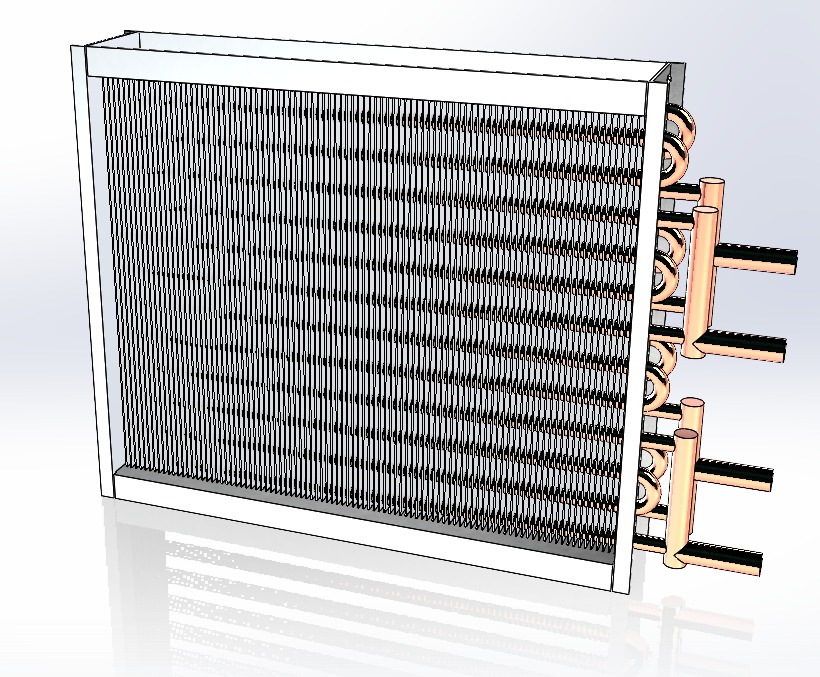
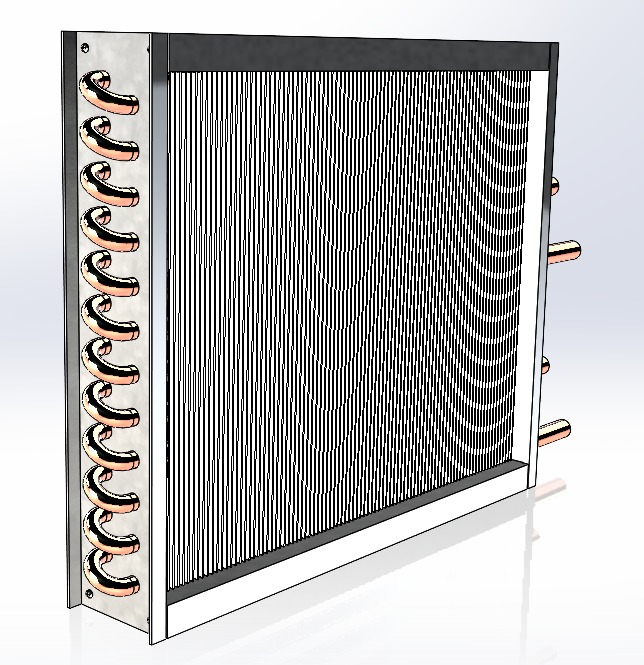
Refrigerant coils are essential heat-transfer components used in HVAC, refrigeration, and process cooling systems. Designed to support efficient temperature control and reliable system operation, they can be configured for a variety of commercial, industrial, and specialized applications.
Our refrigerant coil solutions are engineered and manufactured around the specific requirements of each project. Available in DX evaporator, condenser, and heat reclaim configurations, each coil can be custom-built to match the required capacity, dimensions, materials, airflow conditions, refrigerant type, circuiting, operating pressures, and installation constraints.
Applications include data center & electronics cooling, gas compression, ground support, HVAC, military, refrigerated display cases, and transit cooling. Whether the project involves modern refrigerants, prototype systems, or legacy and obsolete refrigerant applications, we adapt the design to support the equipment’s operating conditions and long-term performance requirements.
GALLERY
CONSTRUCTION OPTIONS
|
Component |
Material |
Type & Dimensions |
|
Tubes |
Copper, Aluminum, Steel, Stainless Steel, Copper- Nickel |
Diameter: 5/16”, 3/8”, ½”, 5/8” Wall Thickness: 0.012”- 0.049” |
|
Fins |
Aluminum, Copper |
Shine Wave, Flat or corrugated. Thickness: 0.006”, 0.008”, 0.010” |
|
Frame |
Galvanized, 304 & 316 Stainless Steel, Aluminum, Copper |
Gauges: 12, 14, 16, 18 |
|
Connections |
Copper, Steel, Red Brass, Stainless Steel |
Sweat, NPT, Grooved, Flanged. From ½” to 4” |
|
Coating |
AA, Heresite, Electro-Fin, Blygold PPG |
|
|
Accessories |
Intermediate drain pan, “A” Shape |
|
Certification stamps





Refrigerant Coils
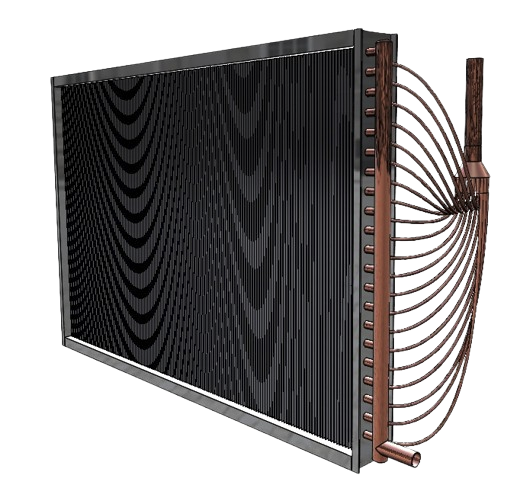
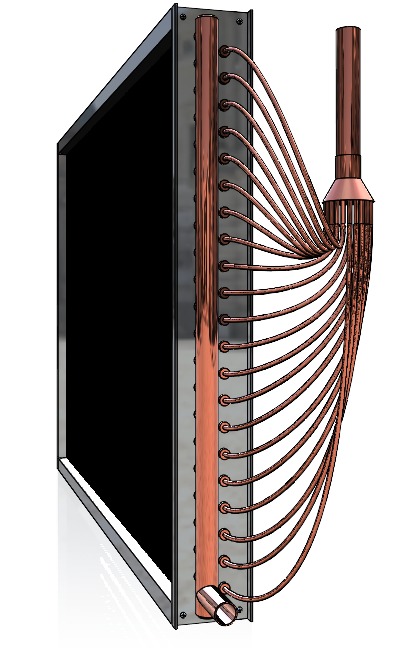
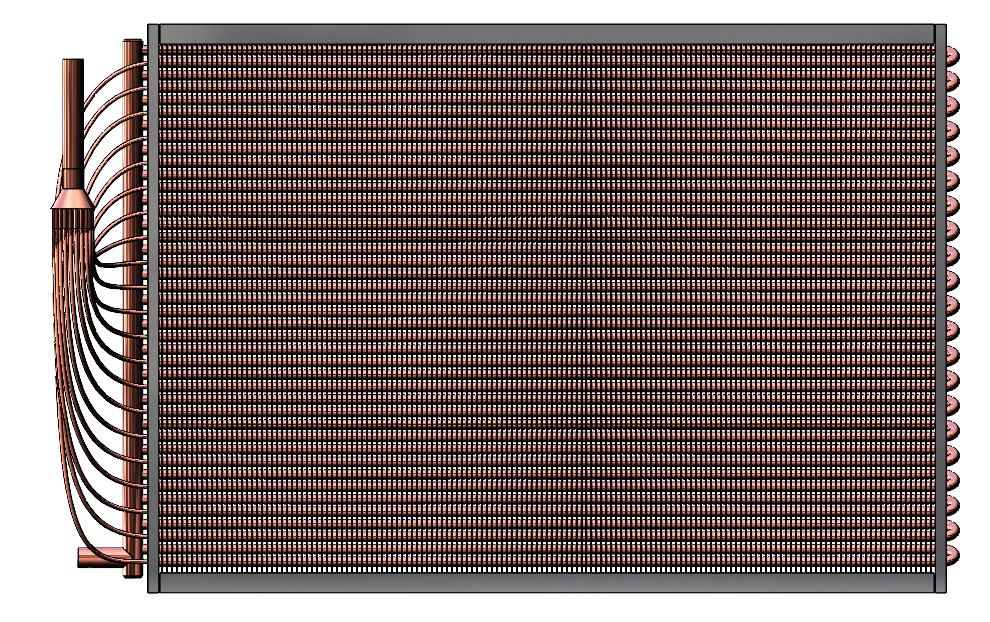
Refrigerant coils are heat transfer components used in HVAC and refrigeration systems to absorb, reject, or recover heat. They are typically designed with copper tubes, aluminum fins, and custom circuiting to match airflow, refrigerant type, capacity, pressure, and installation requirements.
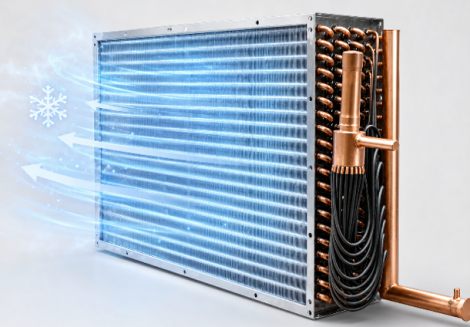
Evaporator
Evaporator coils are used to absorb heat from the air stream. As refrigerant passes through the coil, it evaporates and removes heat from the air, producing cooling. These coils are commonly used in air conditioning systems, refrigeration equipment, air handlers, fan coils, and process cooling applications.
Condenser
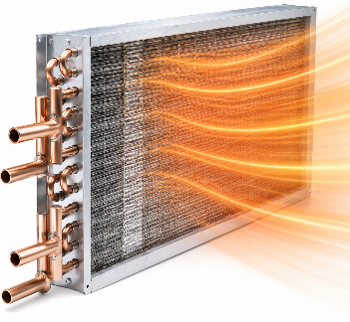
Condenser coils reject heat from the refrigerant to the surrounding air. Hot refrigerant vapor enters the coil and condenses into liquid as heat is removed. Condenser coils are commonly used in outdoor condensing units, refrigeration systems, rooftop units, chillers, and heat rejection equipment.
Heat Pump
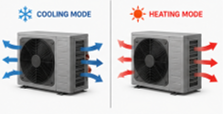
Heat pump coils are designed to operate in both heating and cooling modes. Depending on the system cycle, the coil may function as an evaporator or condenser. These coils are commonly used in reversible HVAC systems where the same equipment provides cooling during warm conditions and heating during colder conditions.
Heat Reclaim
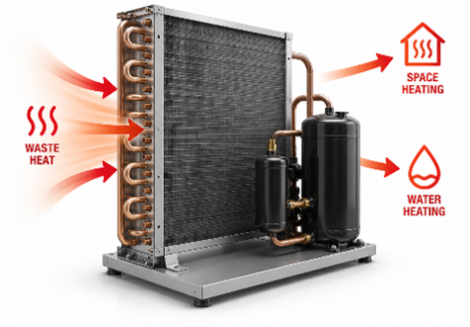
Heat reclaim coils are used to recover waste heat from refrigeration or HVAC systems and reuse it for another purpose, such as preheating air, domestic water, or process water. This improves overall system efficiency by reducing wasted energy and lowering operating costs.
HVAC and Refrigeration
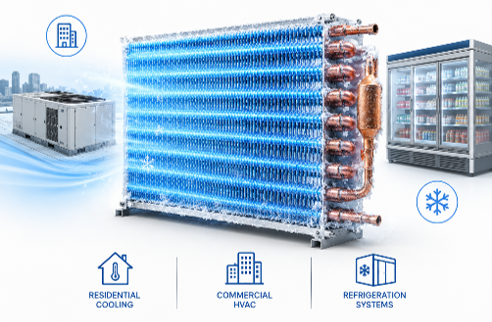
Refrigerant coils are used in both comfort HVAC and commercial refrigeration applications. In HVAC systems, they support air conditioning, heat pumps, dehumidification, and ventilation equipment. In refrigeration systems, they are used for temperature control in cold rooms, display cases, process cooling, and industrial refrigeration equipment.
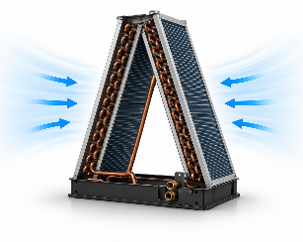
“A” Shape
“A” shape coils, also called A-coils, are configured with two coil slabs arranged in an angled “A” formation. This design provides a large heat transfer surface within a compact footprint and is commonly used in residential and light commercial air conditioning systems, furnace coil sections, and air handlers. The shape helps improve airflow distribution and allows condensate to drain toward the lower drain pan.